
preface
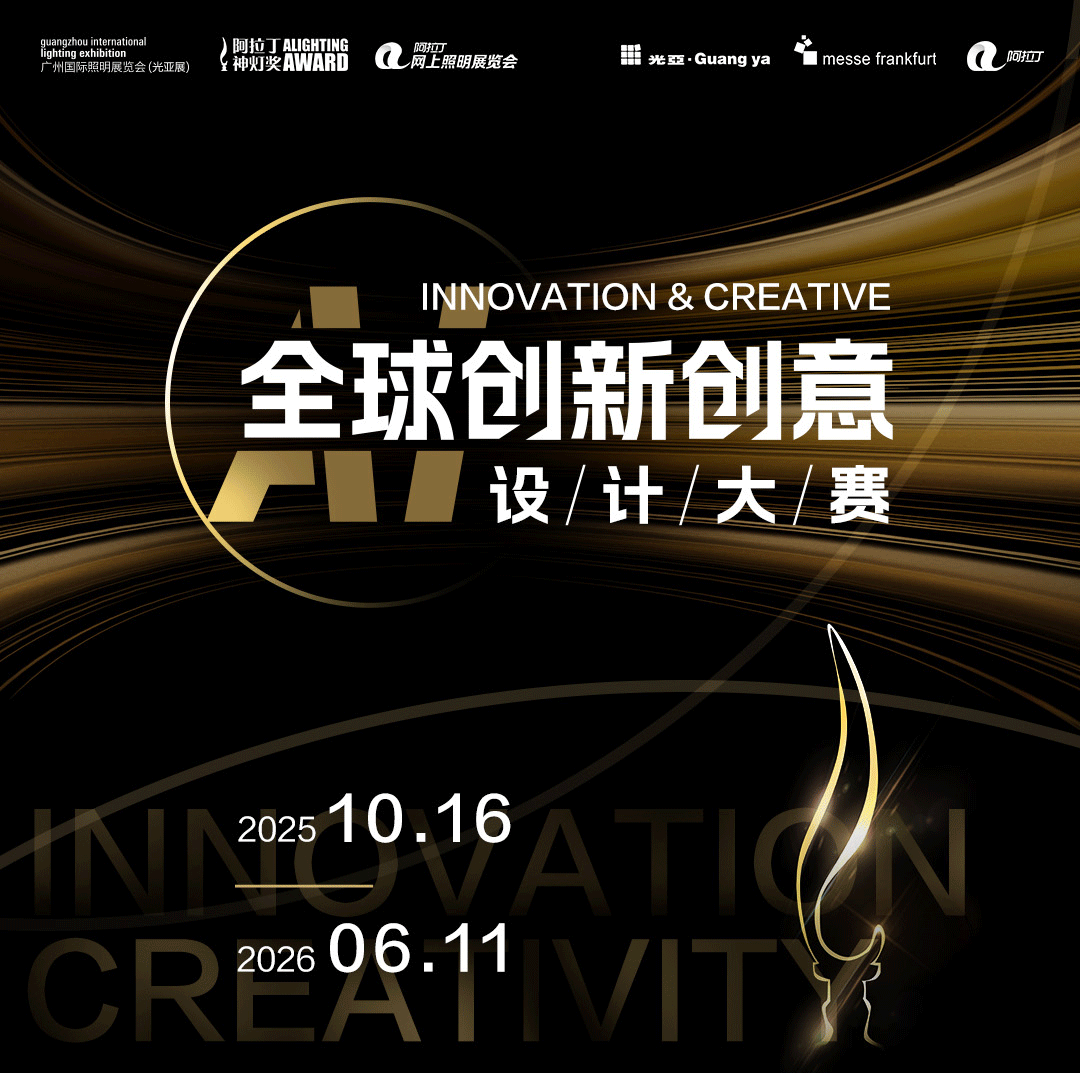
The Global Innovative Design Competition is a newly established international event under the Aladdin Lighting Award. With "Global Vision" as its core philosophy, it focuses on the cross-disciplinary integration of artificial intelligence and lighting technology, committed to building a high-end international competition platform that combines cutting-edge technology, artistic expression, and industrial implementation.
This year's competition innovatively features two parallel tracks—the AIGC Lighting Design Competition and the Cultural Tourism Planning Competition. It aims to discover a new generation of design and planning leaders with forward-looking vision and technological integration capabilities, promoting the lighting and cultural tourism industries toward digitalization, intelligence, and human-centric development. The goal is to guide the global design and cultural tourism sectors toward a more innovative and sustainable future.
This track will focus on the innovative application of artificial intelligence (AI) technology in the field of lighting design. Participants are required to utilize AIGC tools to achieve breakthroughs in areas such as luminaire design, light environment planning, and lighting art expression.
This track emphasizes the integration of lighting technology with cultural tourism scenarios. Participants are tasked with designing forward-looking and implementable lighting art implementation plans based on specific cultural tourism contexts.
Using a national application system, the competition selects winners through nationwide open selection and online roadshow finals. Winners gather at the Guangzhou Guangya Fair for presentations and recognition. This online-offline integration creates a sustainable innovation ecosystem linking creativity, technology, industry, and market, fueling continuous growth for talents and projects, and setting a new benchmark for global lighting and cultural tourism.
Award Settings


Competition Structure: The competition adopts a national application system with a two-tier online selection: preliminary review and final presentation. It features two categories—AIGC Lighting Design and Cultural Tourism Planning. Five finalists (National Top Five) are selected per category for the online finals, where strict evaluation determines the rankings: first place wins first prize; second and third win second prize; fourth and fifth win third prize. All National Top Five finalists receive the "Outstanding Designer" title, an invitation to the Guangzhou Guangya Fair, and a cash prize.
schedule
Oct 16, 2025
March 26, 2026
April 1-6, 2026
Five finalists selected per category
April 24, 2026
National Top 5 online presentations
June 11, 2026
COMPETITION SYSTEM
Domestic and international designers, as well as university students majoring in design-related fields, are eligible to participate. There are no restrictions on age or nationality.
1. Each participant may submit no more than 3 entries in total.
2. Submitted works must include, but are not limited to, the following required components:
(Theme is open; scope includes indoor/outdoor environmental design, public art design, light installations, luminaire design, etc.)
▶ Main Work Files (Images or video: at least 4 images, or video no longer than 5 minutes)
▶ Creative Statement (Within 500 words, detailing the cultural concept, and explaining how AI tools were used for design analysis and conceptualization. The statement should clearly express the cultural significance and emotional expression of the design.)
▶ Process Documentation (Records of AI tool usage, e.g., MidJourney prompts, ControlNet parameters, etc.)
(Scope includes night tourism planning, scenic area light experience, IP interpretation, immersive projects, regional integration schemes, etc.)
▶Complete Design/Planning Proposal (Including market analysis, business format design, operation model, project positioning, investment budget, benefit forecast, cultural integration points, etc.; Design drawings/rendering images in JPG/PNG format with resolution ≥ 300dpi)
▶Video Presentation (MP4 format, 1-5 minutes, with subtitles; optional)
*Submission Method: Submit personal information and works online via the official competition website.The competition features two categories—AIGC Lighting Design and Cultural Tourism Planning—and follows a national application system with three phases: nationwide open selection, online roadshow finals, and onsite presentation at the Guangzhou Guangya Fair.
①Nationwide Open Selection: Submissions are collected nationwide, from which five finalists per category are selected as the "National Top 5" to advance.
②Online Roadshow Finals (Final Judging): For AIGC Lighting Design, finalists complete a given challenge within one week and present/defend online; for Cultural Tourism Planning, finalists present and defend their original submissions. Each category's five finalists are ranked to determine one First Prize (1st place), two Second Prizes (2nd & 3rd), and two Third Prizes (4th & 5th).
③Guangya Fair Onsite Presentation: All 10 National Top 5 winners are invited to the awards ceremony and design forum at the Guangzhou Guangya Fair to present their work on the industry's premier stage.
(1)Innovativeness (25%)
The work should demonstrate novel and unique concepts, with design philosophy and outcomes exhibiting significant originality and industry foresight.
(2)Cultural Expression (25%)
The work must accurately convey cultural connotations, deeply reflect cultural values, traditional elements, or regional characteristics, and demonstrate innovative integration of traditional elements with modern design and AI technology.
(3)Technical Integration (25%)
The depth and ingenuity in applying AI technology during concept generation and solution development; technical solutions should demonstrate both advanced capabilities and thorough execution.
(4)Artistic Presentation (15%)
The design outcome should possess high aesthetic appeal, harmony, and visual impact, while also addressing human-centric design and comfort in the lit environment.
(5)Sustainability (10%)
The work should demonstrate clear market value and social impact, fully embodying principles of energy conservation, environmental protection, and sustainable development.
(1)Planning Competence (50%)
The proposal should have a clear theme, prominent cultural characteristics, a complete content structure, and diverse forms of presentation. The creative concept must be unique, combining cultural innovation value with market appeal. Visual expression should be aesthetically pleasing and cohesive, capable of creating an immersive experience and narrative tension.
(2)Cultural Integration (25%)
The proposal should deeply explore core elements such as traditional culture and intangible cultural heritage, achieving innovative transformation. It should effectively enhance visitor engagement and experiential depth through diverse interactive activities and digital interactive technologies.
(3)Sustainability (20%)
The proposal should employ low-carbon, energy-saving, and environmentally friendly technologies and materials, along with sustainable operational models. It must deliver social benefits that promote the local economy, employment, and cultural heritage, ensuring the project's long-term value.
(4)Technology Application (5%)
Innovative application of cutting-edge technologies such as VR/AR/AI and digital twins to enhance the visitor experience (not mandatory, but awarded bonus points).
The intellectual property rights of all submitted works belong to the original authors.By submitting their works, participants confirm that the design concepts are their own original creations. Should any infringement occur, the participant shall bear full responsibility, and the organizer reserves the right to disqualify the infringing entry.The competition organizing committee and its partner organizations are granted non-exclusive rights to the submitted works, including but not limited to reproduction, distribution, exhibition, online dissemination, adaptation, compilation, and publication.
JURY(Listed in alphabetical order by surname)

广州珂瑞照明设计有限公司首席设计师&总经理、广州市设计产业协会常务副会长

广东省照明学会院秘书长、广东产品质量监督检验研究照明室主任/高级工程师

广州市市政工程设计研究总院副总工程师、广州市城市照明协会会长

珠海十字门中央商务区建设控股有限公司常务副总经理、珠海电力设计院有限公司常务副总经理

广州热伙照明设计有限公司总经理

深圳市壹光壹城照明设计有限公司总经理

香港方黄(设计)股份有限公司创始人

厦门市产品质量监督检验院光学室主任/教授级高工

深圳市光影百年科技有限公司董事长

厦门市照明学会秘书长

湖南省建筑设计院集团股份有限公司机电设计研究院院长

东莞市照明学会秘书长

广东科技学院艺术设计学院学术分委会主任教授/高级工程师

五邑大学应用物理与材料学院教授

广州市元色照明设计有限公司总经理/合伙人

广州美术学院工艺美术学院副教授、广州市美协数字艺术委员会副秘书长

广东省工程勘察设计行业协会建筑装饰分会会长、广东思哲设计院有限公司院长

中国城市规划设计研究院城市照明规划设计中心主任

福建省光电行业协会秘书长、厦门市光电半导体行业协会秘书长

湖南省建筑设计院集团股份有限公司执行总工程师、湖南省照明学会理事长、研究员级高级工程师

中国灯饰照明共享联盟秘书长

湖南亮典照明科技有限公司副总经理/顾问

深圳市照明学会副理事长、秘书长

利亚德智慧科技集团总工程师

清华大学深圳研究生院实验室副主任

全国照明电器标准化技术委员会秘书处高级项目经理

湖南省照明学会秘书长

广州市照明建设管理中心总工程师

广州光匙设计有限公司设计总监

湖南省照明学会驻会副理事长

光亚照明研究院常务副院长/高级工程师

广东省光电技术协会会长、华南理工大学教授

深圳市市容景观事务中心副主任/高级工程师

台湾LED照明产业联盟/國立台灣科技大學秘书长

广东耀旭照明工程设计有限公司设计总监

广东华南建筑设计研究院有限公司声光设计分院副院长

厦门市市政工程设计院有限公司城建院总工/高级工程师

广东领秀光电技术有限公司创始人、总裁

香港多媒体设计协会主席、互動媒體藝術家

叶勇进大师照明灯饰工作室高级工业设计师

尚曦照明设计总经理/工程师

哈尔滨工业大学(深圳)副教授/博士生导师

深圳市新城市规划建筑设计股份有限公司光环境艺术所所长/高级工程师

湖南省建筑设计院集团股份有限公司景观与环境设计研究院副院长

广东省城市建筑学会会长

深圳大学建筑与城市规划学院教授

中宣部《中国符号》总导演

锐设计/锐品/深圳敌赞科技有限公司总经理

香港低碳设计协会会长
ORGANIZATION















CONtact
陈小丽 女士
 13602438941
 cxl@alighting.cn

何绮姗 女士
18902263629
award@alighting.cn

李杰先生
18902263646
750340420@qq.com